返回列表 發帖

[轉貼] 《大法師》金獎名導William Friedkin命盤

《大法師》金獎名導威廉佛烈金今傳逝世 享壽87歲

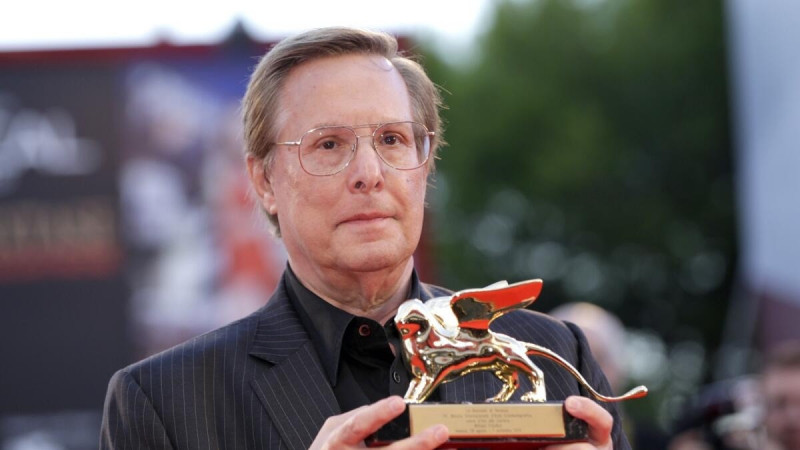
導演威廉佛烈金曾獲威尼斯影展頒發終身成就金獅獎。(美聯社)

〔記者許世穎/綜合報導〕曾執導《霹靂神探》、《大法師》等片,並以前者拿下奧斯卡最佳導演的美國名導威廉佛烈金,今傳出已於美國時間週一(7日)在洛杉磯去世,享壽87歲。他被視為70年代好萊塢最具冒險精神的新一代青年導演之一,並於1991年與好萊塢首位女性製片廠負責人雪莉蘭辛結婚,也是蘭辛確認佛列金逝世消息。

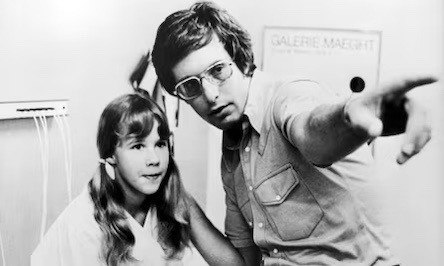
導演佛烈金1971年執導的《霹靂神探》以刺激寫實的動作場面,被視為電影技術一大突破,一舉拿下奧斯卡最佳影片、導演、男主角(金哈克曼)等5項大獎,兩年後再推出《大法師》更讓他的導演生涯攀上巔峰。

威廉佛烈金(右)因執導《大法師》,讓他的導演生涯攀上巔峰。(翻攝自IMDB)

《大法師》除了叫好叫座,也再度入圍奧斯卡10項大獎並獲得最佳改編劇本和音效兩獎,多年後還以加入刪減畫面的《大法師:公開完整版》重映,一樣掀起熱潮。

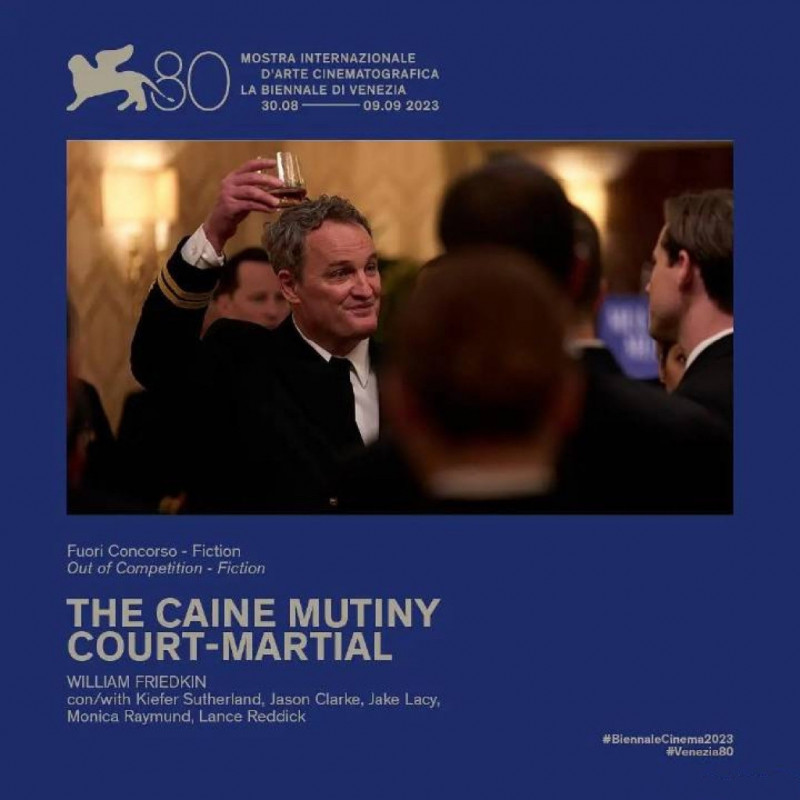
威廉佛烈金執導新作、翻拍自《凱恩艦事變》的《The Caine Mutiny Court-Martial》,將於今年威尼斯影展登場。(翻攝自推特)

佛烈金曾獲威尼斯影展頒發終身成就金獅獎,他執導的《大法師》也將於今年威尼斯影展經典單元亮相,執導新作、翻拍自《凱恩艦事變》的《The Caine Mutiny Court-Martial》也將於今年威尼斯影展登場,遺憾的是他本人已無法前往造勢。

https://ent.ltn.com.tw/news/breakingnews/4389331

請從論壇首頁右上角進入「個人中心」,就可以編輯您個人的頭像、簽名檔及自我介紹。請用高級模式回覆,點HTML框,可有更多變化豐富版面。
不怕辛苦,就怕不公平;不怕卑微,就怕不公義。
可以哭泣,不要洩氣;可以悲傷,不要放棄!

威廉·佛雷金[編輯]

維基百科,自由的百科全書
跳至導覽跳至搜尋
威廉·佛雷金
威廉·佛雷金在2012年的多維爾美國電影節
導演
出生1935年8月29日
 美國伊利諾州芝加哥
逝世2023年8月7日(87歲)
 美國加利福尼亞州洛杉磯
職業導演、製片人、劇作家
配偶珍妮·摩露(1977-1979)
萊斯利-安·唐恩(1982-1985)
凱利·蘭格(1987-1990)
雪莉·蘭辛(1991-2023)
活躍年代1965年–2023年
獎項

威廉·佛雷金(英語:William Friedkin,1935年8月29日—2023年8月7日)[1] 是一位美國知名電影導演製片人劇作家。最著名的作品是其執導的1971年的警匪片霹靂神探》和1973年的恐怖片大法師》。其中前者為他贏得了第44屆奧斯卡金像獎最佳導演

早年生活[編輯]

威廉於1935年8月29日出生在美國第三大城市芝加哥,他的母親叫Rae (Green) Friedkin,父親叫Louis Friedkin,是一位業餘壘球運動員、商船海員和男裝推銷員[2],兩人均是從烏克蘭移民來到美國的猶太人[3]。童年時期看過奧遜·威爾斯的經典作品《大國民》後,威廉開始對電影著迷,並在讀完高中後立即進入芝加哥的地方電視台WGN-TV工作,並在之後開始了紀錄片或直播電視節目導演的職業生涯。

事業[編輯]

2013年獲得威尼斯影展頒發的榮譽金獅獎

個人生活[編輯]

威廉至今共結過4次婚,其中與法國女演員珍妮·摩露間的首次婚姻最為短暫,但與凱利·蘭格的第二次婚姻以及和萊斯利-安·唐恩之間的第三次婚姻也只持續了3年左右。他與凱利有一個女兒,與萊斯利有一個兒子Jack,另外還有一個兒子Cedric,他的母親是澳大利亞舞蹈家珍妮弗·耐琳·史密斯[4]。他現在的妻子是電影製作人雪莉·蘭辛,兩人於1991年結婚。

逝世[編輯]

威廉於2023年8月7日在洛杉磯去世,享壽87歲。他身後留下了第四任妻子蘭辛和兩個兒子。[5]

電影作品[編輯]

導演[編輯]

年代譯名原名附註
1967歡樂時光Good Times
1968生日舞會The Birthday Party
1968春色滿瀛台The Night They Raided Minsky's
1970樂團男孩The Boys in the Band
1971霹靂神探The French Connection第44屆學院獎導演獎
美國導演工會獎傑出導演成就
第29屆金球獎最佳導演獎
提名英國電影學院獎最佳導演
1973大法師The Exorcist帝國電影大師獎
第31屆金球獎最佳導演獎
提名第46屆學院獎導演獎
提名美國導演工會獎傑出導演成就
1977千驚萬險Sorcerer同時也是製片人
1978龍虎大賊少雙手The Brink's Job
1980虎口巡航Cruising同時也是編劇
1983世紀大交易Deal of the Century
1985生死洛城To Live and Die in L.A.同時也是編劇
干邑警察電影節觀眾獎
1985迷離境界The Twilight Zone電視劇-執導 第1季,第4集:Nightcrawlers
1986不適用C.A.T. Squad電視
同時也是製片人
1987憤怒Rampage同時也是製片人和編劇
提名:土星獎最佳導演
提名:多維爾美國電影節影評人獎
1988不適用C.A.T. Squad: Python Wolf電視
同時也是製片人
1990魔鬼保姆The Guardian同時也是編劇
1994火爆教頭Blue Chips
1994越獄者Jailbreakers電視
1995玉焰Jade
1997十二怒漢12 Angry Men電視
2000火線衝突Rules of Engagement
2003獵殺The Hunted
2006千瘡百孔Bug
2011殺手喬Killer Joe參加第68屆威尼斯國際影展的角逐[6]
2017神父阿摩特與惡魔The Devil and Father Amorth紀錄片
2023肯恩艦叛變The Caine Mutiny Court-Martial
https://zh.wikipedia.org/zh-tw/%E5%A8%81%E5%BB%89%C2%B7%E5%BC%97%E8%8E%B1%E5%BE%B7%E9%87%91
請從論壇首頁右上角進入「個人中心」,就可以編輯您個人的頭像、簽名檔及自我介紹。請用高級模式回覆,點HTML框,可有更多變化豐富版面。
不怕辛苦,就怕不公平;不怕卑微,就怕不公義。
可以哭泣,不要洩氣;可以悲傷,不要放棄!

TOP

William Friedkin

From Wikipedia, the free encyclopedia
William Friedkin
Friedkin in 2017
Born
William David Friedkin

August 29, 1935
DiedAugust 7, 2023 (aged 87)
EducationSenn High School
Occupations
  • Director
  • producer
  • screenwriter
Years active1962–2023
Spouses
Children2
Signature

William David Friedkin (August 29, 1935 – August 7, 2023) was an American film and television director, producer, and screenwriter closely identified with the "New Hollywood" movement of the 1970s.[1][2] Beginning his career in documentaries in the early 1960s, he directed the crime thriller film The French Connection (1971), which won five Academy Awards, including Best PictureBest Adapted Screenplay, and Best Director for himself, and the supernatural horror film The Exorcist (1973), which earned him a nomination for the Academy Award for Best Director.

His other films included the drama The Boys in the Band (1970), the thriller Sorcerer (1977), the crime comedy drama The Brink's Job (1978), the crime thriller Cruising (1980),[3][4] the neo-noir thriller To Live and Die in L.A. (1985), the psychological horror film Bug (2006), and the black comedy Killer Joe (2011).

Early life and education[edit]

Friedkin was born in Chicago, Illinois, on August 29, 1935,[5] the son of Rachael (née Green) and Louis Friedkin. His father was a semi-professional softball player, merchant seaman, and men's clothing salesman. His mother, whom Friedkin called "a saint", was an operating room registered nurse.[5] His parents were Jewish emigrants from Ukraine.[6] His grandparents, parents, and other relatives fled Ukraine during a particularly violent anti-Jewish pogrom in 1903.[7] Friedkin's father was somewhat uninterested in making money, and the family was generally lower middle class while he was growing up.[5] According to film historian Peter Biskind, "Friedkin viewed his father with a mixture of affection and contempt for not making more of himself."[5] According to his memoir, The Friedkin Connection, Friedkin had the utmost affection for his father.[citation needed]

After attending public schools in Chicago, Friedkin enrolled at Senn High School, where he played basketball well enough to consider turning professional.[8] He was not a serious student and barely received grades good enough to graduate,[9] which he did at the age of 16.[10] He said this was because of social promotion and not because he was bright.[11]

Friedkin began going to movies as a teenager,[8] and cited Citizen Kane as one of his key influences. Several sources claim that Friedkin saw this motion picture as a teenager,[12] but Friedkin himself said that he did not see the film until 1960, when he was 25 years old. Only then, Friedkin said, did he become a true cineaste.[13] Among the movies which he also saw as a teenager and young adult were Les DiaboliquesThe Wages of Fear (which many consider he remade as Sorcerer), and Psycho (which he viewed repeatedly, like Citizen Kane). Televised documentaries such as 1960's Harvest of Shame were also important to his developing sense of cinema.[8]

Friedkin began working in the mail room at WGN-TV immediately after high school.[14] Within two years (at the age of 18),[15] he started his directorial career doing live television shows and documentaries.[16] His efforts included The People vs. Paul Crump (1962), which won an award at the San Francisco International Film Festival and contributed to the commutation of Crump's death sentence.[15][17] Its success helped Friedkin get a job with producer David L. Wolper.[15] He also made the football-themed documentary Mayhem on a Sunday Afternoon.[18]

Career[edit]

1965–1979[edit]

As mentioned in his voice-over commentary on the DVD re-release of Alfred Hitchcock's Vertigo, Friedkin directed one of the last episodes of The Alfred Hitchcock Hour in 1965, called "Off Season". Hitchcock admonished Friedkin for not wearing a tie while directing.[19]

In 1965, Friedkin moved to Hollywood and two years later released his first feature film, Good Times starring Sonny and Cher. He has referred to the film as "unwatchable".[20] Several other "art" films followed: The Birthday Party, based on an unpublished screenplay by Harold Pinter, which he adapted from his own play; the musical comedy The Night They Raided Minsky's, starring Jason Robards and Britt Ekland; and the adaptation of Mart Crowley's play The Boys in the Band.[citation needed]

Friedkin and others during the filming of the Exorcist
From left: Friedkin, Owen Roizman and William Peter Blatty on set of The Exorcist

His next film, The French Connection, was released to wide critical acclaim in 1971. Shot in a gritty style more suited for documentaries than Hollywood features, the film won five Academy Awards, including Best Picture and Best Director.[21] Friedkin's next film was 1973's The Exorcist, based on William Peter Blatty's best-selling novel, which revolutionized the horror genre and is considered by some critics to be one of the greatest horror movies of all time. The Exorcist was nominated for 10 Academy Awards, including Best Picture and Best Director. It won for Best Screenplay and Best Sound. Following these two pictures, Friedkin, along with Francis Ford Coppola and Peter Bogdanovich, was deemed one of the premier directors of New Hollywood. In 1973, the trio announced the formation of an independent production company at Paramount PicturesThe Directors Company. Whereas Coppola directed The Conversation and Bogdanovich, the Henry James adaptation, Daisy Miller, Friedkin abruptly left the company, which was soon closed by Paramount.[22]

Friedkin's later movies did not achieve the same success. Sorcerer (1977), a $22 million American remake of the French classic The Wages of Fear, co-produced by both Universal and Paramount, starring Roy Scheider, was overshadowed by the blockbuster box-office success of Star Wars, which had been released exactly one week prior.[21] Friedkin considered it his finest film, and was personally devastated by its financial and critical failure (as mentioned by Friedkin himself in the 1999 documentary series The Directors). Sorcerer was shortly followed by the crime-comedy The Brink's Job (1978), based on the real-life Great Brink's Robbery in Boston, Massachusetts, which was also unsuccessful at the box-office.[citation needed]

1980–1999[edit]

In 1980, Friedkin directed an adaptation of the Gerald Walker crime thriller Cruising, starring Al Pacino, which was protested during production and remains the subject of heated debate. It was a critically assailed financial disappointment.[23]

Friedkin had a heart attack on March 6, 1981, due to a genetic defect in his circumflex left coronary artery, and nearly died. He spent months in rehabilitation.[24] Throughout the 1980s and 1990s, his films received lackluster reviews and moderate ticket sales.[citation needed] These included Deal of the Century in 1983, starring Chevy ChaseGregory Hines, and Sigourney Weaver.

Friedkin directed the 1985 music video "Somewhere" for Barbra Streisand. He appears as Streisand's interviewer (uncredited) on her video "Putting It Together: The Making of the Broadway Album".

The action/crime movie To Live and Die in L.A. (1985), starring William Petersen and Willem Dafoe, was a critical favorite and drew comparisons to Friedkin's own The French Connection (particularly for its car chase sequence), while his courtroom drama/thriller Rampage (1987) received a fairly positive review from Roger Ebert.[citation needed] He next directed the horror film The Guardian (1990) and then the thriller Jade (1995), starring Linda Fiorentino. Though the latter received an unfavorable response from critics and audiences, he said it was one of the favorite films he directed.[25]

2000–2023[edit]

Friedkin speaking at a podium
Friedkin at the 2012 Deauville American Film Festival

In 2000, The Exorcist was re-released in theaters with extra footage and grossed $40 million in the U.S. alone. Friedkin directed the 2007 film Bug due to a positive experience watching the stage version in 2004. He was surprised to find that he was, metaphorically, on the same page as the playwright and felt that he could relate well to the story.[26] The film won the FIPRESCI prize at the Cannes Film Festival. Later, Friedkin directed an episode of the TV series CSI: Crime Scene Investigation titled "Cockroaches", which re-teamed him with To Live and Die in L.A. star William Petersen.[citation needed] He directed again for CSI's 200th episode, "Mascara".[citation needed]

In 2011, Friedkin directed Killer Joe, a black comedy written by Tracy Letts based on Letts' play, and starring Matthew McConaugheyEmile HirschJuno TempleGina Gershon, and Thomas Haden ChurchKiller Joe premiered at the 68th Venice International Film Festival, prior to its North American debut at the 2011 Toronto International Film Festival. It opened in U.S. theaters in July 2012, to some favorable reviews from critics but did poorly at the box office, possibly because of its restrictive NC-17 rating. In April 2013, Friedkin published a memoir, The Friedkin Connection.[27] He was presented with a lifetime achievement award at the 70th Venice International Film Festival in September.[28] In 2017, Friedkin directed the documentary The Devil and Father Amorth about the ninth exorcism of a woman in the Italian village of Alatri.[29] In August 2022, it was announced officially that Friedkin would be returning to film directing to helm an adaptation of the two-act play The Caine Mutiny Court-Martial with Kiefer Sutherland starring as Lt. Commander Queeg.[30] The film will debut in the out-of-competition category at the Venice Film Festival.[citation needed]

Unrealized projects[edit]

YearTitle and descriptionRef.
1970sThe Bunker Hill Boys, a film for The Directors Company[31]
Untitled sci-fi film with Peter Gabriel[32][33]
The Devil's Triangle, a UFO thriller starring Marlon BrandoSteve McQueen and Charlton Heston[34][35]
A Safe Darkness, a documentary about horror cinema featuring interviews with Fritz Lang and Roman Polanski[36][35]
A 10-hour television adaptation of Thomas Thompson's novel Blood and Money[37][38]
A film adaptation of Ron Hansen's novel Desperadoes written by Walon Green[39]
1980sA film adaptation of Robin Cook's novel Brain[40]
That Championship Season[41]
A film adaptation of William Peter Blatty's novel Legion[42]
A film adaptation of Frank De Felitta's novel Sea Trial[43]
A film adaptation of Don Pendleton's The Executioner series written by Hilary Henkin starring Sylvester Stallone and Cynthia Rothrock[44][45]
The Gambler, a film written by Edward Neumeier and Michael Miner starring Sylvester Stallone[45]
Desperate Hours[46]
Untitled biographical film about 1950s songwriting duo Jerry Leiber and Mike Stoller[47][48]
1990sElsewhere, a ghost story with William Peter Blatty[49]
The Diary of Jack the Ripper, a biopic about James Maybrick written by Chris DeVore starring Anthony Hopkins[50][51]
A film adaptation of John Flood's novel Bag Men starring Michael Keaton[52]
remake of the 1996 made-for-television film Truth or Dare written by William Davies[53]
Night Train, a biopic about boxer Sonny Liston written by Shane Salerno and Tyger Williams starring Ving Rhames[54][55][56]
Battle Grease, a film about the account of the Florence Maybrick murder trial[57]
2000sA film adaptation of Larry Collins' novel O Jerusalem! written by James Dearden[58]
Shooter starring Tommy Lee Jones[55]
A film adaptation of Thomas Thompson's novel Serpentine[59][60][61]
A film adaptation of Robert Silverberg's novel The Book of Skulls written by Jeff Davis and Terry Hayes[62][61][63]
The Man Who Kept Secrets, a biopic about Hollywood lawyer Sidney Korshak[64]
A film adaptation of Chris Greenhalgh's novel Coco and Igor starring Mads Mikkelsen and Marina Hands[65][66]
2010sA film adaptation of William Peter Blatty's novel Dimiter[67]
Trapped, an indie thriller set in Europe starring Demián Bichir[68][69]
I Am Wrath starring Nicolas Cage[70]
Mae West starring Bette Midler adapted from West's autobiography Goodness Had Nothing To Do With It[71]
A TV pilot based on his film To Live and Die in L.A. written by Robert Moresco[72][73]
Untitled Killer Joe spinoff TV series[74]

Archive[edit]

The moving image collection of William Friedkin is held at the Academy Film Archive. The material at the Academy Film Archive is complemented by material in the William Friedkin papers at the academy's Margaret Herrick Library.[75]

Influences[edit]

Friedkin cited Jean-Luc GodardFederico FelliniFrançois Truffaut, and Akira Kurosawa as influences.[76] Friedkin named Woody Allen as "the greatest living filmmaker".[77]

In regards to influences to specific films on his films, Friedkin noted that the film's documentary-like realism was the direct result of the influence of having seen Z, a French film by Costa-Gavras. Friedkin mentioned the film's influence on him when directing The French Connection:

After I saw Z, I realized how I could shoot The French Connection. Because he shot Z like a documentary. It was a fiction film but it was made like it was actually happening. Like the camera didn't know what was gonna happen next. And that is an induced technique. It looks like he happened upon the scene and captured what was going on as you do in a documentary. My first films were documentaries too. So I understood what he was doing but I never thought you could do that in a feature at that time until I saw Z.[78]

Personal life and death[edit]

Friedkin with wife Sherry Lansing in 2012

William Friedkin was married four times:

While filming The Boys in the Band in 1970, Friedkin began a relationship with Kitty Hawks, daughter of director Howard Hawks. It lasted two years, during which the couple announced their engagement, but the relationship ended about 1972.[87] Friedkin began a four-year relationship with Australian dancer and choreographer Jennifer Nairn-Smith in 1972. Although they announced an engagement twice, they never married. They had a son, Cedric, on November 27, 1976.[88] Friedkin and his second wife, Lesley-Anne Down, also had a son, Jack, born in 1982.[82] Friedkin was raised Jewish, but called himself an agnostic later in life.[89][90]

Friedkin died from heart failure and pneumonia at his home in Bel Air, Los Angeles, on August 7, 2023, at the age of 87, 3 weeks before his 88th birthday.[91][92]

https://en.wikipedia.org/wiki/William_Friedkin

請從論壇首頁右上角進入「個人中心」,就可以編輯您個人的頭像、簽名檔及自我介紹。請用高級模式回覆,點HTML框,可有更多變化豐富版面。
不怕辛苦,就怕不公平;不怕卑微,就怕不公義。
可以哭泣,不要洩氣;可以悲傷,不要放棄!

TOP

返回列表